Submersible Well Pump Replacement Cost in Gresham, OR: Depth, Process, and Pricing
If your well quit producing water, or an inspection just flagged a pump on its last legs, you need two things fast: a realistic number and a clear process. This guide walks through submersible well pump replacement for properties in and around Gresham, OR, step by step, so you know what drives the pump cost by depth, what the crew actually does on-site, and how to tell whether you need a new pump at all. That last part matters, because a fair share of "dead pump" calls turn out to be a cheaper fix.
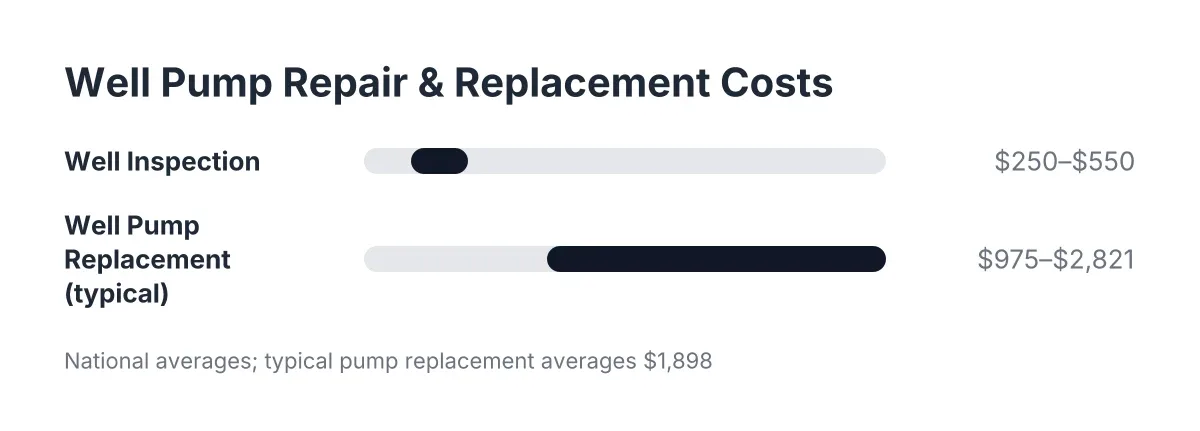
For context on budget, the national average well pump replacement cost is $1,898 based on 1,339 verified projects, with most homeowners paying between $975 and $2,821, according to Angi. Deep wells with heavy pipe and long wire runs land toward or above the top of that range. Shallow wells with easy access land toward the bottom. The steps below show exactly where your well falls and why.
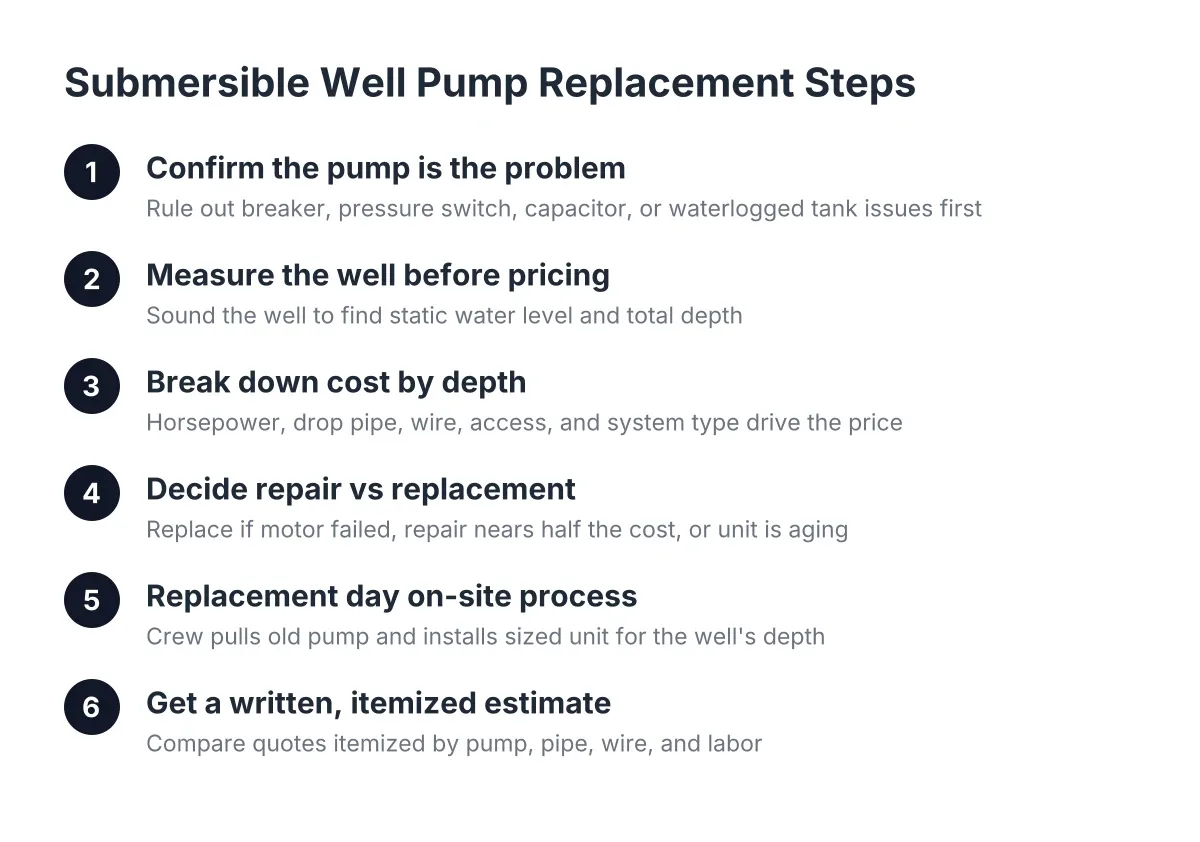
Step 1: Confirm the Pump Is Actually the Problem
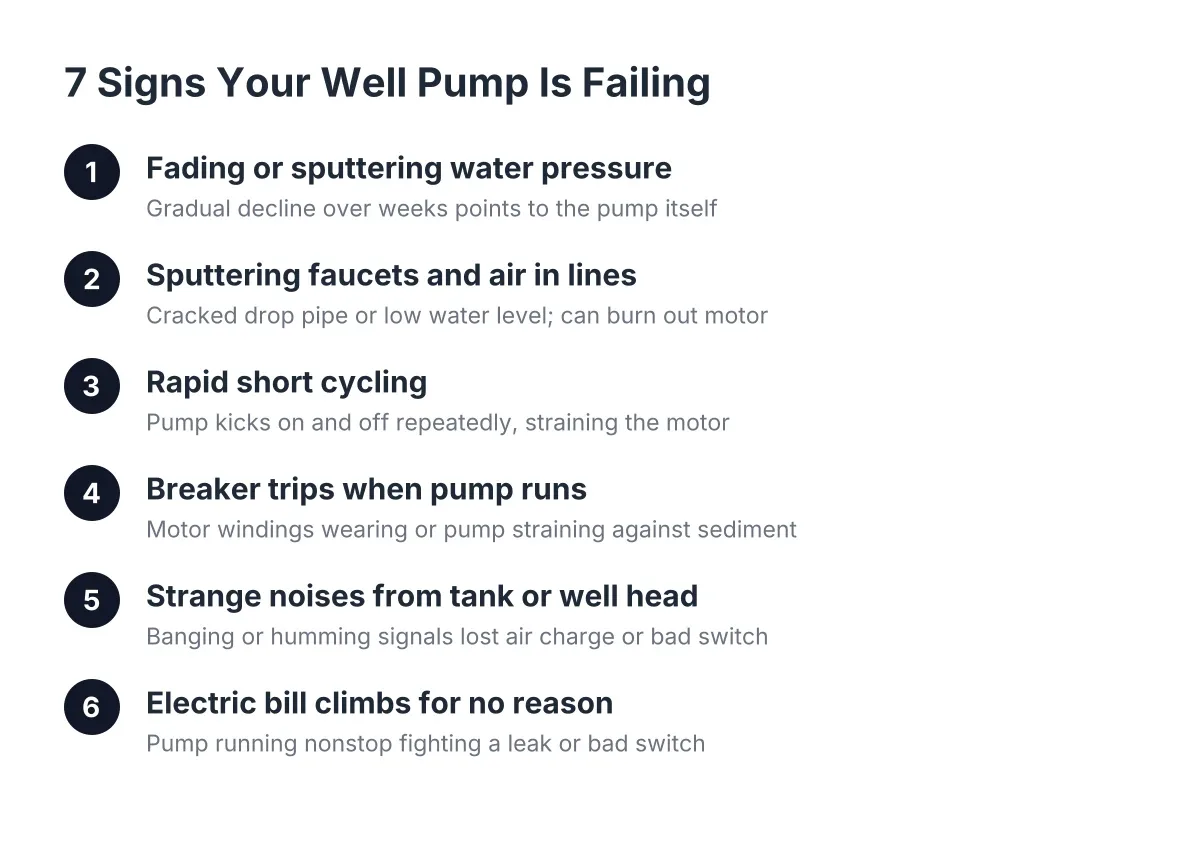
Before anyone pulls a pump, rule out the cheap stuff. No water at the tap does not automatically mean a failed pump. A tripped breaker, a bad pressure switch, a failed pump start capacitor, or a waterlogged pressure tank can all mimic a dead pump, and each costs far less to fix than full well pump replacement.
A sound diagnosis checks, in order:
- Power at the panel and at the pressure switch, confirmed with a voltage meter
- The pressure switch contacts, which burn and stick over time
- The pressure tank, since a tank with a failed bladder short-cycles the pump
- Current draw on the pump circuit, which tells you if the motor is seized, shorted, or drawing nothing at all
If the motor draws no current with good power supplied, or the amperage reading shows a shorted winding, the pump itself is the problem. For a landlord managing from a distance, this is the step where you should expect a written explanation of what was found before you authorize anything bigger. Any well pump repair outfit worth hiring can tell you, in plain terms, why repair is off the table and replacement is on it.
Step 2: Measure the Well Before Pricing the Job
Depth is the single biggest cost driver in submersible well pump replacement, so measure before you price. A proper quote starts by sounding the well with a weighted tape to find the static water level and total depth. That measurement determines the pump model, the horsepower, the length of drop pipe, and the wire gauge, which together make up most of the bill.
This step also prevents the most common sizing mistake: matching a pump to the wrong depth. A submersible pump's rated lift is a hard limit. Set a shallow-rated pump too deep and it cannot push water to the surface; buy far more lift than the well needs and you pay for capacity the system can never use. The pump also gets set above the bottom of the well, not on it, with extra wire left for connections, so the usable depth and the drilled depth are not the same number.
Around Gresham, OR and the rural edge communities like Boring, Damascus, Corbett, and Sandy, well depths vary widely from one road to the next because the aquifer conditions change with the terrain. Two neighbors can have wells that differ by hundreds of feet, which is why a phone quote without a depth measurement or a well log is a guess, not an estimate.
How Pump Cost by Depth Breaks Down
Deeper wells cost more to re-pump for three stacked reasons: more material, bigger equipment, and more labor. Every added foot of well means another foot of drop pipe, another foot of submersible wire, and more weight hanging in the casing. Past a certain weight, hand-pulling stops being safe and the job needs a pump hoist truck, which changes the labor picture.
Here is how the main cost factors break out:
- Pump horsepower and build. Deeper settings and higher household demand call for more horsepower and more pump stages, and stainless or heavy-duty motors cost more than entry-level units.
- Drop pipe and wire. Material cost scales directly with depth, and heavier wire gauge is required on long runs to avoid voltage drop.
- Access and location. A wellhead in an open gravel pull-off is a faster job than one in a well house, under a deck, or down a muddy driveway a truck cannot reach in February.
- What comes up with the pump. Corroded pipe, failing fittings, an aged pitless adapter, or a pressure tank near the end of its life can add legitimate scope to the job.
- System type. Swapping a submersible for a submersible is the standard job. Converting an old jet pump system to a submersible costs more, since the piping and wiring often must come up in short cut sections when overhead clearance is tight.
For a rental property owner, the practical move is simple: ask for the estimate in writing, itemized by pump, pipe, wire, and labor, before authorizing the work. A depth-based line-item estimate is also your protection against overpaying, because you can see exactly what the well's depth is adding to the price.
Step 3: Decide Between Repair and Replacement
Replace the pump when the motor has failed, the repair cost approaches half the replacement cost, or the unit is past its expected service life. Most submersible pumps run reliably for many years; however, an old pump that has already been pulled and repaired once is usually a poor bet for a second repair, since the labor to pull it is a large share of the total cost either way.
Lean toward repair when the pump is younger and the failure is above ground: a pressure switch, a control box, a tank, or wiring. Lean toward replacement when the pump is down-hole, aging, and already showing warning signs like sputtering taps, sediment, or cycling.
Suppose you own a rental near Estacada and the tenant reports no water on a Monday. In that scenario, a good sequence looks like this: the service tech coordinates access directly with the tenant, diagnoses on-site, sends you photos of the amperage readings and the wellhead, and emails a written estimate the same day. You authorize by phone, the pump gets replaced, and the tenant has water back without you driving two hours each way. That communication chain is a fair thing to ask about before you hire anyone.
One honest limitation: if the well itself is failing, a new pump will not fix it. In Oregon, about 1,220 domestic wells went dry or fell below pumping capacity between June 2021 and December 2023, and the true figure is likely higher since reporting is not mandatory, according to the U.S. Geological Survey. If the static water level has dropped near the pump setting, you are looking at a well problem, not a pump problem, and that calls for an aquifer and well depth assessment before you spend money on hardware.
Step 4: Know What Happens on Replacement Day
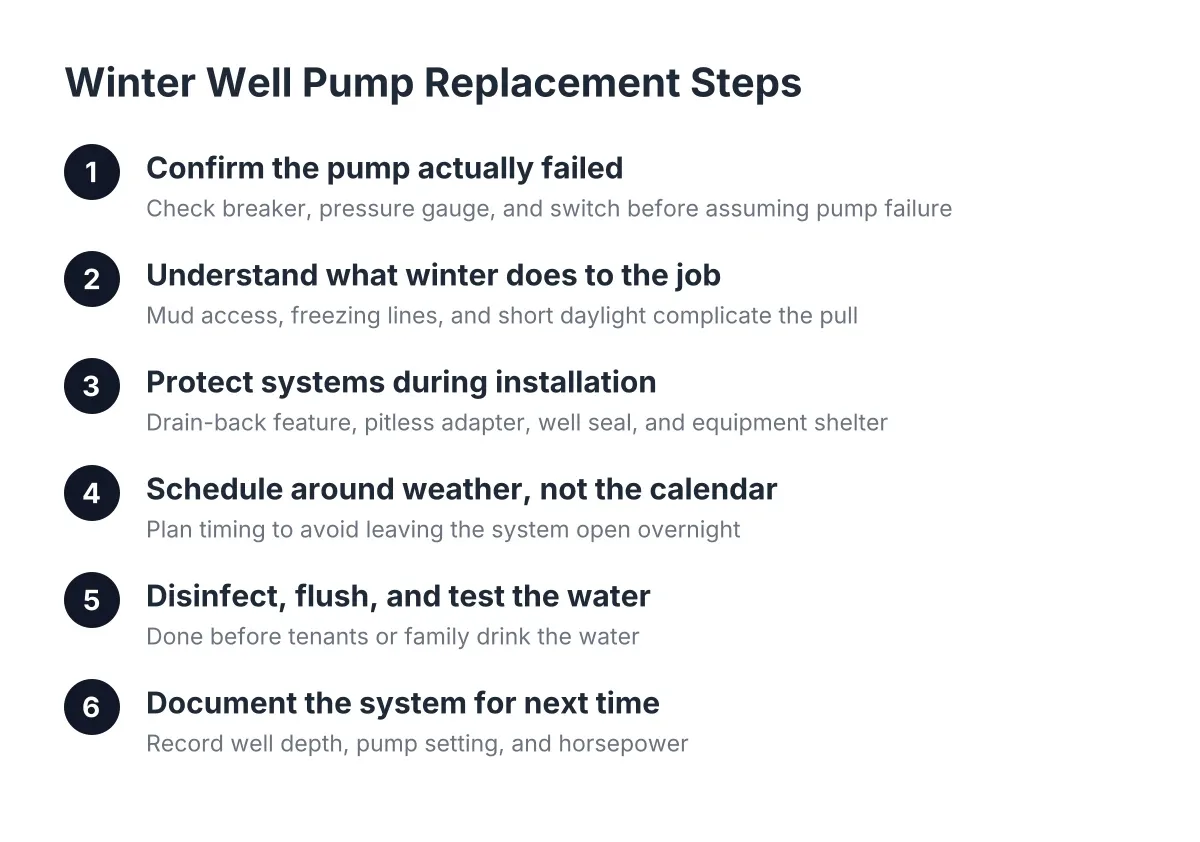
A standard submersible swap on an accessible well takes most of a day. The crew shuts off power at the panel, opens the wellhead, and pulls the old pump, drop pipe, and wire from the casing, by hand on shallower wells or with a hoist truck on deep ones. The old pump comes out attached to the pipe, so you can see its condition for yourself, or in photos if you are off-site.
Next, the new pump gets wired with waterproof splices, attached to new or inspected drop pipe, and lowered to its measured setting above the well bottom. The crew reconnects at the pitless adapter, restores power, and tests pressure, flow, and amp draw before buttoning up the wellhead.
Expect some temporary cloudy or discolored water afterward. A new submersible moves water in the casing with more force than the old tired pump did, and it can stir up iron and sediment that built up on the casing walls over the years. Running outside spigots for a while usually clears it. Residential systems pair the submersible pump with a pressure tank, which may sit in the well, the house, or a crawl space, according to the Indiana Department of Health, so the tech should check that tank's pressure as part of the job.
Should You Test the Water After Replacing the Pump?
Yes, testing well water after a pump replacement is cheap insurance, especially for a rental or a home with young children. Opening the well and disturbing the casing can temporarily affect water quality, and a test confirms the water is back to normal before anyone drinks it. It is standard practice to run the well extensively first so the sample reflects normal water quality, according to the CDC.
In addition, if the property is heading toward a sale or a new tenancy, pairing the pump work with a well inspection kills two birds with one visit. A typical professional well inspection costs $250 to $550, according to Angi, which is modest next to the cost of the pump job itself.
Step 5: Get the Estimate in Writing and Compare It Fairly
Judge estimates on scope, not just the bottom line. A low bid that excludes the drop pipe, wire, or hoist time is not actually low; it is incomplete. When you compare quotes for water well pump replacement in the Gresham area in 2026, make sure each one answers the same questions:
- What is the measured well depth and pump setting?
- What pump model and horsepower is being installed, and why that size for this well?
- Is drop pipe and wire being replaced or reused, and in what material?
- Is the pressure tank included in the inspection, and is it holding air?
- What does the total include for labor, and what would add cost if discovered down-hole?
If you are managing the property from a distance, add one more: who communicates with the tenant, and will you get photos and the written estimate before work starts. Those are reasonable requests, and a local well and pump service used to working around Gresham, Sandy, Boring, Damascus, and Oregon City should be able to say yes to all of them without hesitation.
Handled this way, replacing a submersible pump is a predictable job with a knowable price, driven mostly by the depth of your specific well. Measure first, diagnose before replacing, get the numbers in writing, and the odds of overpaying drop close to zero.
If you need well drilling, Clackamas Well Drilling can help.
Prefer to talk it through? Call (503) 782-5215 — a quick call is usually the fastest way to get a straight answer for your situation.