Emergency Well Drilling in the 97086 Area: What to Do When Your Well Fails
When a well quits, you need two things fast: water for the house today and a straight answer about whether the well can be saved. If you are searching for a well drilling contractor in 97086 or anywhere around Gresham, Happy Valley, Damascus, or Boring, this FAQ walks through what an emergency call actually looks like, what gets fixed same-day, what requires drilling, and how to tell a real local operator from a bare directory listing. Most "well drillers" ranking in this zip code are a homepage with a phone number and nothing behind it. Here is how to vet one when you cannot afford to pick wrong.
My well stopped producing water. Is it the well or the pump?
When a well suddenly stops producing water, the cause is more often the pump, the pressure switch, or the pressure tank than the well itself. A dry aquifer usually shows up gradually, with sputtering faucets and sediment over weeks. A sudden total loss of water on a well that worked yesterday points to equipment, and equipment is usually a same-day repair.
According to the Indiana Department of Health, residential well systems typically use a submersible pump paired with a pressure tank, which may sit in the well, the house, or a crawl space. Any of those components can fail. A good well and pump technician checks the electrical side and the pressure tank first, because pulling the pump is the expensive step and should come after the cheap checks.
This distinction matters for your wallet. Well pump repair or well pump replacement is a fraction of the cost of drilling, so do not let anyone jump straight to "you need a new well" without showing you why.
Can a well actually be drilled same-day in an emergency?
Same-day well drilling around Gresham is rare; same-day diagnosis and same-day pump and well repair are realistic. Drilling a new water well requires a permit filed with the state, a site evaluation, and a rig with a crew scheduled onto your property. What a responsive local contractor can do today is restore water another way or get the drilling process started immediately.
Here is what "emergency response" honestly means for a failed well:
- Same day: diagnosis, well pump repair, pressure tank or switch replacement, well pump installation if the pump is the failure point, and temporary water arrangements.
- Days: permitting, site evaluation, and scheduling the rig for a new well or a deepening job.
- A week or more: the actual well drilling, casing, disinfection, pump system installation, and water testing on a replacement well.
Anyone promising a drilled, producing replacement well this afternoon is telling you what you want to hear. The contractor worth hiring tells you the real sequence and starts it today.
Do wells actually go dry in Oregon?
Yes, wells go dry in Oregon more often than most owners realize. According to the U.S. Geological Survey, about 1,220 domestic wells in Oregon went dry or fell below pumping capacity between June 2021 and December 2023, and the true number is likely higher because reporting is not mandatory.
The state does watch groundwater closely. The Oregon Water Resources Department maintains more than 400 state observation wells and measures more than 1,200 additional observation wells to track aquifer conditions. On the rural edge of Clackamas and Multnomah County, where Sandy, Estacada, Corbett, and Damascus homes sit on private wells, a dropping aquifer is a real possibility, not a scare tactic. The fix may be lowering the pump, deepening the existing well, or drilling new, in that order of cost.
What does emergency well work cost around Gresham?
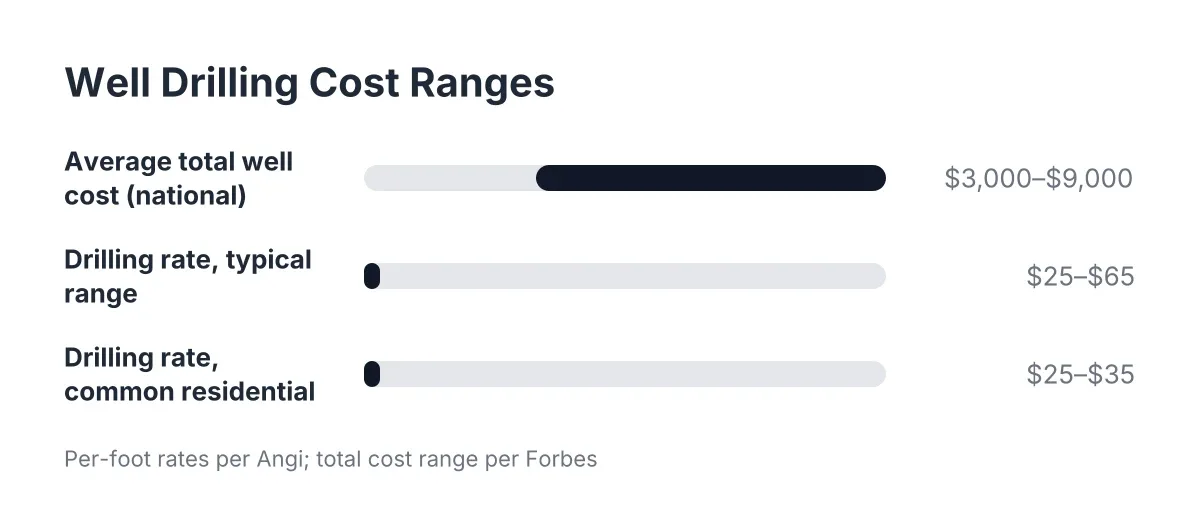
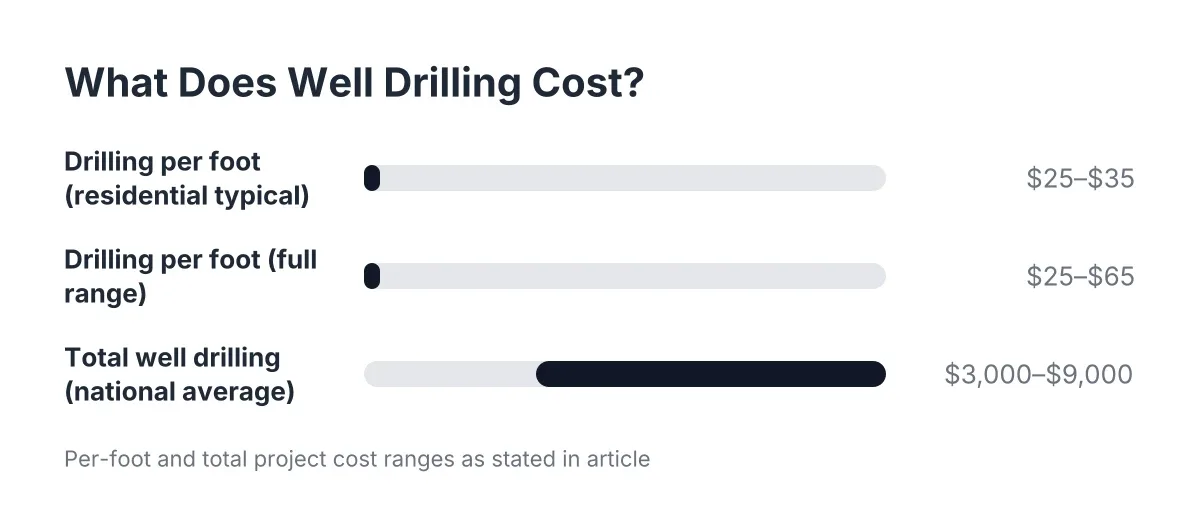
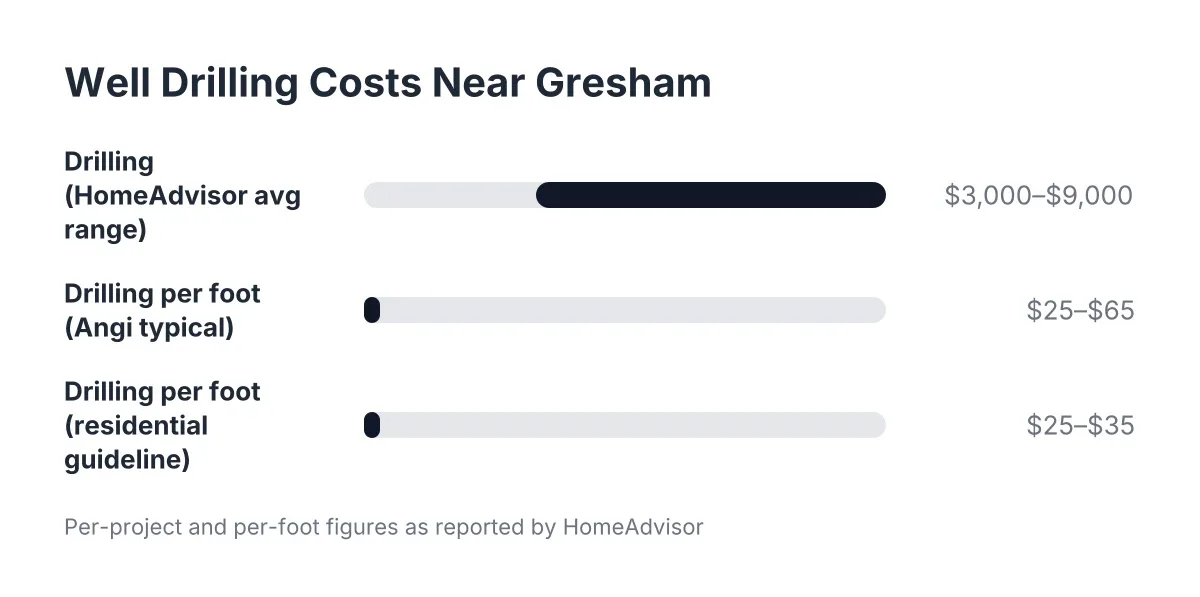
Emergency well work around Gresham ranges from a modest pump or switch repair up to the cost of a full new well. For drilling, HomeAdvisor reports homeowners spend an average of $3,000 to $9,000 to drill a well, with an average price of $5,500. Angi puts typical drilling at $25 to $65 per foot, with $25 to $35 per foot as a guideline for most residential projects.
Your actual number depends on depth to water, what the rig has to drill through, and site access. East of Gresham the ground varies from property to property, so a per-foot bid without a depth discussion is a guess dressed up as a quote. HomeAdvisor also notes most owners need to drill or re-drill a well every 10 to 20 years, which is worth knowing if you are the Pre-Purchase Well Inspector type evaluating a home under contract: the age of the well tells you where you are in that cycle.
For an emergency pump failure rather than a dry well, expect costs well under drilling territory. A well specialist near me search should surface someone willing to explain both numbers before anyone commits to the bigger one.
How do I vet a well drilling contractor in 97086 fast?
Vetting a well drilling contractor in 97086 comes down to three fast checks: Oregon licensing, local drilling history, and willingness to diagnose before quoting. You can run all three in one phone call, even with a closing deadline or a dry house pressing on you.
- Ask about Oregon licensing and the well log. Oregon requires licensed well constructors, and every drilled well generates a well log filed with the state. A real operator talks about well logs without prompting. A directory listing reseller will not know what you mean.
- Ask what they have drilled near you. Depth and geology in Boring differ from Corbett. A contractor who has worked your area can describe what the ground typically does there. Vague answers suggest an out-of-area crew subcontracting your job.
- Ask for diagnosis before a drilling quote. The right first step for a failed well is a well inspection, not a rig in the driveway. Anyone who quotes a new well over the phone, sight unseen, is selling, not diagnosing.
Much of the advice on hiring a well driller applies double in an emergency, because pressure is exactly when bad contractors close deals. The Yelp and Facebook listings filling this search are not vetting anyone for you; they rank the zip code, not the work.
What should a proper emergency visit include?
A proper emergency well visit includes electrical and pressure system checks, a pump assessment, a look at the well head and casing, and a written explanation of what failed and why. If the well itself is suspect, it should also include a static water level check and a conversation about the aquifer, not just the hardware.
For example, suppose a homeowner in Damascus wakes up to no water two weeks before listing the house. A typical crew would test the pressure switch and tank first, then pull and test the pump if those pass, and only then talk about water levels and drilling. In that scenario, the homeowner might spend a few hundred dollars on a switch, or face a pump replacement, or learn the well is failing and plan a new one with real numbers. Each outcome beats guessing.
One honest limitation: no contractor can tell you from the driveway whether an aquifer problem is temporary or permanent. Seasonal lows happen, and sometimes the right call is monitoring before drilling. A trustworthy well drilling company near me admits that uncertainty instead of papering over it.
If I need a new well drilled, what happens after the emergency?
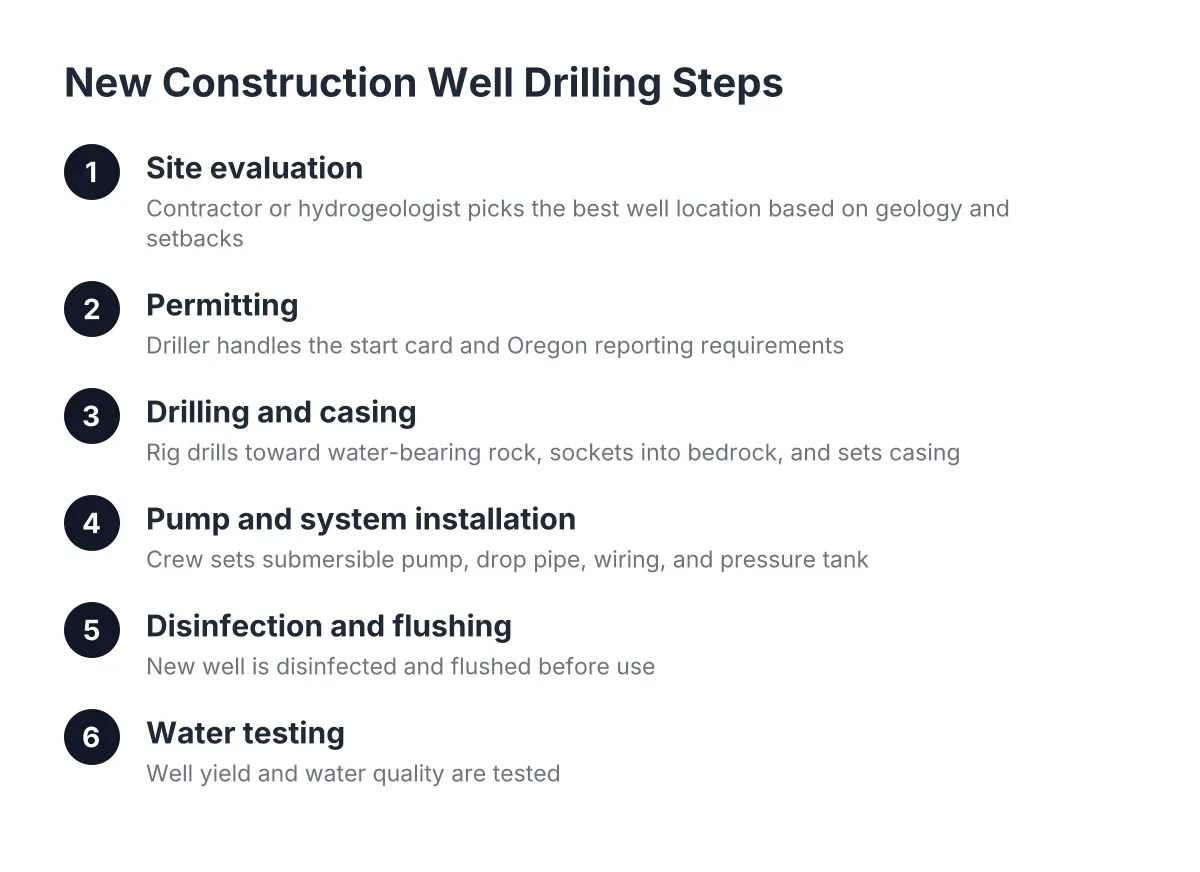
After an emergency confirms the well is done, the replacement process runs in a set order: site evaluation, permitting, drilling, casing, disinfection, pump system installation, and water testing. A contractor or hydrogeologist evaluates the land first to pick the best location, factoring in setbacks, geology, and whether the rig can physically reach the spot.
During drilling, hitting water is not the finish line. Drillers often continue deeper to confirm the flow holds steady and to add depth for sediment settling. According to the New Hampshire Department of Environmental Services, when a drill reaches bedrock, drillers plan to go at least about 10 feet into that rock to seal out dirty surface water and set casing properly.
Afterward, the driller disinfects the well and pump components with chlorine, and the well gets run heavily to flush the residue before regular use, per the San Diego County Department of Environmental Health. It is also standard practice, according to the CDC, to run the well extensively and then take a water sample so the test reflects normal well water quality, not lingering disinfectant. If you are buying the property, insist on seeing that test report before closing.
Does the season affect emergency well drilling near Happy Valley?
Season affects scheduling for well drillers in the Happy Valley and Gresham area, though repair work continues year-round. In cold or wet stretches when outdoor drilling is not practical, contractors shift to shop work and service calls, which can actually mean faster response for well pump repair in winter. Drilling itself may queue up for a workable weather window.
Therefore, if your well fails in December, expect the pump-side fixes fast and the drilling timeline to depend on conditions. A well drilling contractor serving the 97086 area and surrounding rural communities should give you a realistic window up front rather than an optimistic one that slips.
The bottom line for a failed well in the Gresham area
Move fast on diagnosis, slow on drilling. Get a local well and pump technician out today to tell you whether this is a pump problem or a water problem, and make any drilling decision on evidence: the well log, the static water level, and a written inspection. Searches for well drillers happy valley or will hand you a page of thin listings; one phone call using the three vetting questions above will tell you more than all of them. If your well has failed or you are under contract on a property with an unknown well, reach out to a Gresham-area well drilling and pump repair specialist for a diagnosis and a clear written estimate before you commit to anything bigger.
If you need well drilling, Clackamas Well Drilling can help.
Prefer to talk it through? Call (503) 782-5215 — a quick call is usually the fastest way to get a straight answer for your situation.