Hiring a Well Driller Near Gresham: Questions to Ask About Equipment, Depth, and Guarantees
Search for drilling contractors near me from Gresham and you mostly get bare homepages and directory listings with a phone number and nothing behind it. That is a problem when you are trying to decide who should put a water well on your property, or when you are under contract on a home with a private well and need straight answers before closing. This FAQ gives you a vetting framework: the questions to ask any driller about their equipment, how they handle depth, what their paperwork covers, and what a fair quote looks like, so you can tell a real local operator from a listing with a logo.
How do I tell a real local driller from a directory listing?
A real local well drilling company can answer site-specific questions on the phone: what kind of ground they usually hit in your part of Clackamas or Multnomah County, how they decide where to set the rig, and what their drill log will show you. A directory listing or lead-reseller just forwards your number to whoever pays for it.
Ask one simple question early: "Who actually shows up on my property?" If the person on the phone cannot name the driller or describe the rig, you are talking to a middleman. In addition, a local operator will talk about towns, not territories. Someone who works around Sandy, Boring, Damascus, Estacada, Corbett, and Oregon City knows those areas sit on private wells, not city water, and talks like it.
What equipment questions matter when choosing contractors for drilling near you?
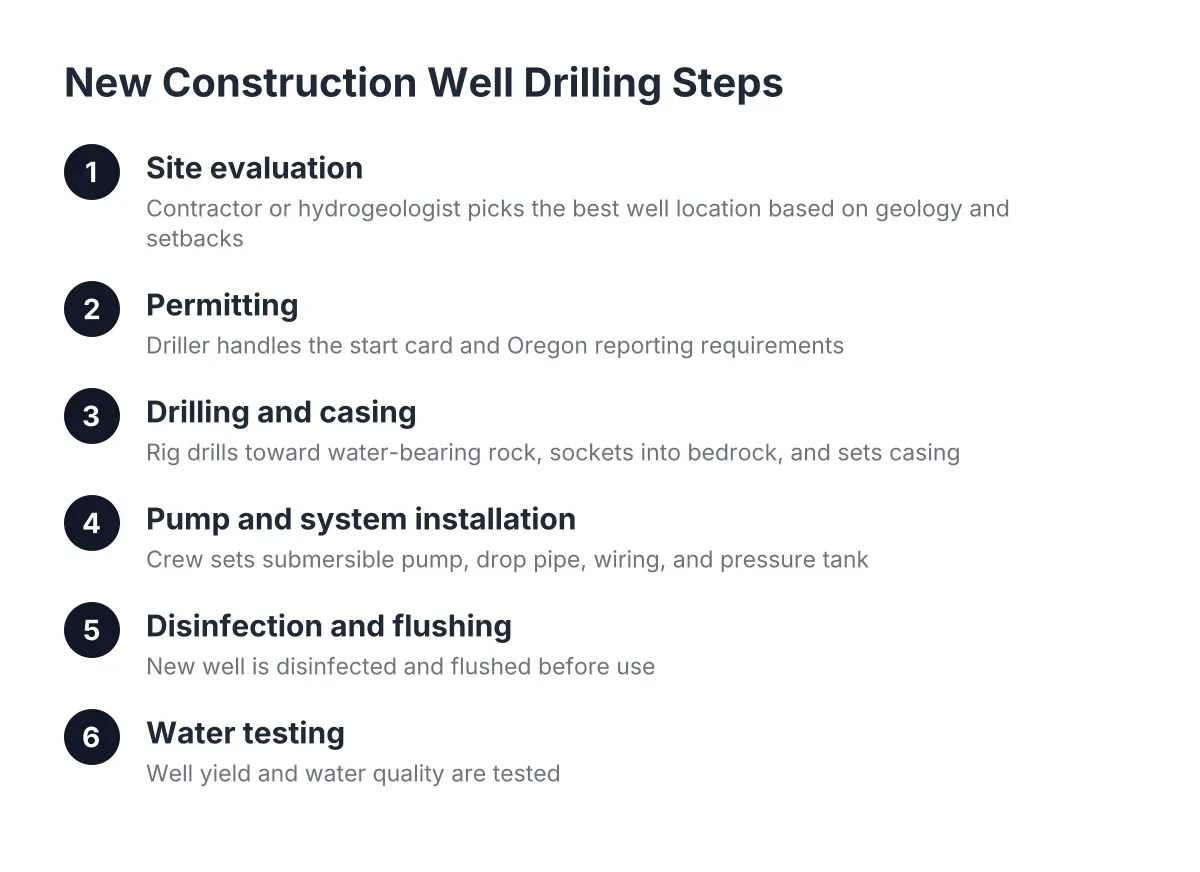
Ask what type of drilling rig they run, whether their equipment can get to your well site, and who operates it. A residential well is typically drilled by a small crew with a standard rig, and that rig needs a clear, stable path to the spot where the well will go. Site access is part of the equipment conversation, not an afterthought.
Useful follow-ups:
- Can your rig reach my site, or will access work (clearing, grading) be extra?
- What happens if you hit bedrock near the surface? Can your equipment drill through it?
- Do you install the casing and pump system yourself, or subcontract that out?
- Will you disinfect the new well before handing it over?
That last one matters. According to the San Diego County Department of Environmental Health, after a new well is drilled the driller disinfects the well and pump components with bleach or chlorine, and the well should be run heavily afterward to flush the residue out. A contractor who shrugs at that question is skipping steps.
What should a driller tell me about depth before the job starts?
An honest driller will not promise an exact depth, because nobody knows the depth to the aquifer until the bit is in the ground. What they can tell you is how they plan for it: how nearby wells on similar ground have behaved in general terms, how they price by the foot, and what happens if the hole comes up dry.
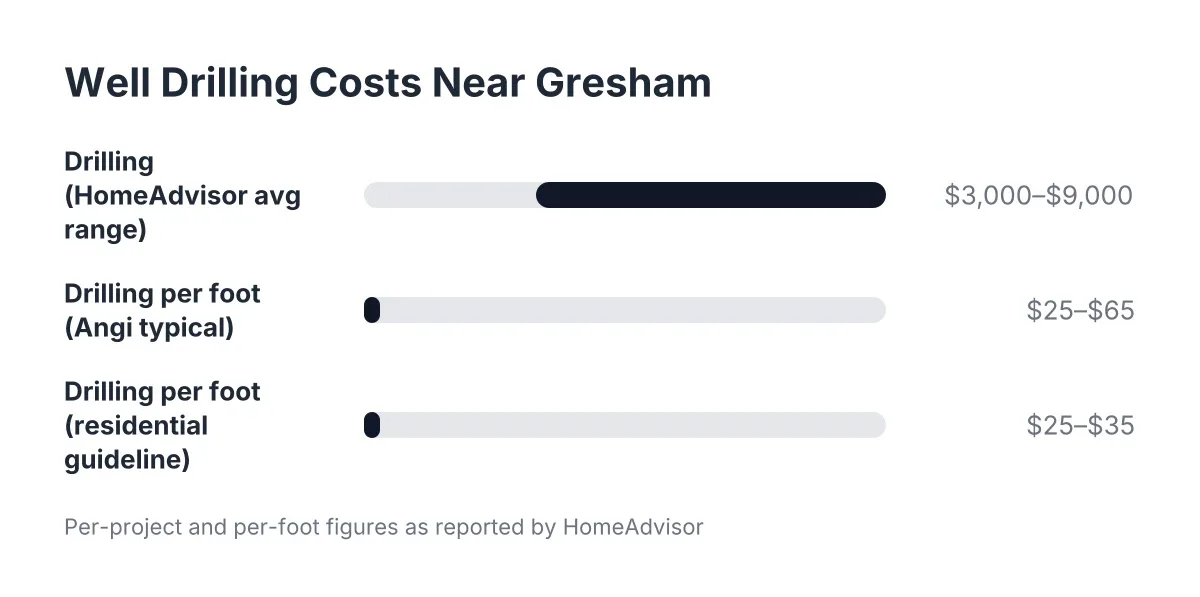
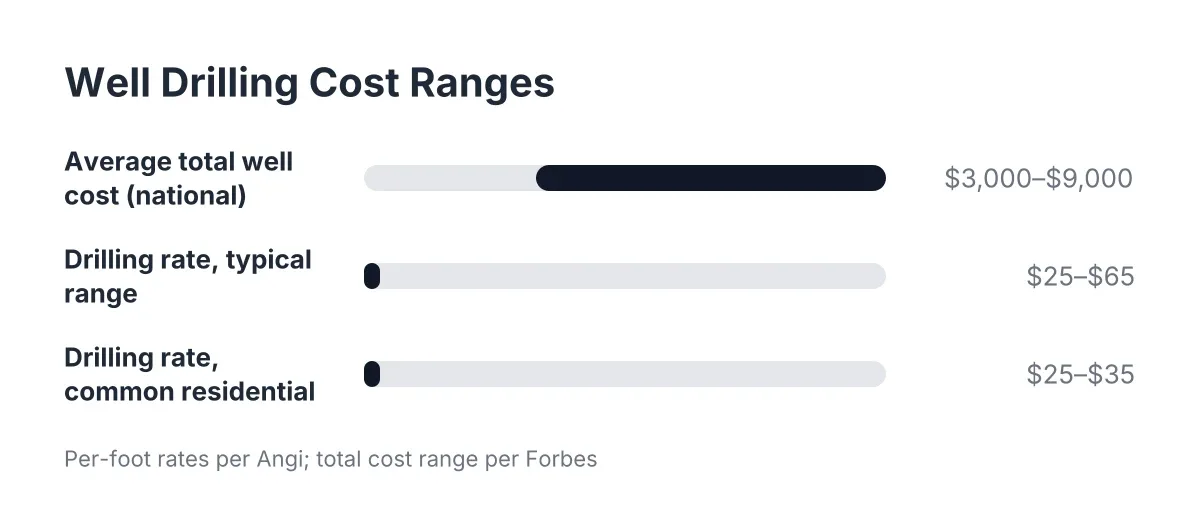
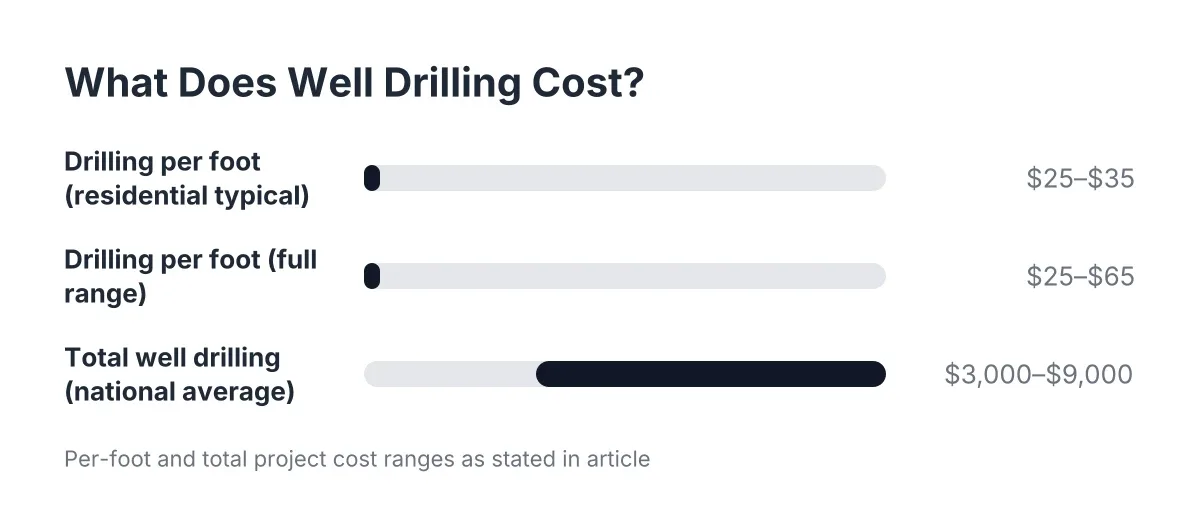
Depth drives cost more than any other single factor. Angi reports the average cost to drill a well runs $25 to $65 per foot, with $25 to $35 per foot typical for most residential projects. Therefore, a quote that names one flat number with no per-foot terms deserves a hard look. Ask how the price changes if the well ends up deeper than expected, and get the answer in writing.
Also ask why they keep drilling after hitting water. A good driller continues past the first water to confirm the flow holds steady and to give the well room for sediment to settle. According to the New Hampshire Department of Environmental Services, when a drill reaches the top of bedrock, drillers plan to go at least about 10 feet into that rock to seal out dirty surface water and create a proper socket for the casing. A driller who can explain that reasoning in plain language is a driller who understands wells, not just holes.
What guarantees can a well drilling company honestly offer?
No honest driller guarantees water. The ground decides that. What a trustworthy contractor can commit to in writing is the construction: proper casing, a sealed annulus, disinfection, a flow test, and a complete drill log noting depth, water production, and water clarity as the hole went down.
Red flags when hiring a well contractor include a verbal "we always find water" promise, no written dry-hole policy, and no mention of a drill log or well report. Ask directly: "If the first hole is dry, what do I pay, and what do we do next?" The quality of that answer tells you more than any ad.
Is this well company licensed in Oregon, and how do I check?
In Oregon, well construction is regulated at the state level, and you can ask any contractor for their license information and verify it with the state before signing anything. Do not take "we're fully licensed" as the answer; take the number and check it yourself. A legitimate well drilling company near me expects that question and answers it without flinching.
While you are at it, ask who pulls the well construction permit, the contractor or you. The right answer is the contractor. Permitting and setback rules vary by county, so a driller familiar with Multnomah and Clackamas County requirements saves you a failed inspection later.
What does well drilling cost, and what does a fair quote include?
Nationally, homeowners spend an average of $3,000 to $9,000 to drill a well, with an average around $5,500, according to HomeAdvisor. Forbes puts the average at $5,625 with a similar range. Your number depends on depth to groundwater, site geology and access, drilling difficulty, and dry-hole risk; those four variables drive the price more than anything else.
A fair quote itemizes the drilling per foot, casing, the pump and pressure tank, disinfection, and the flow test. Residential well systems typically pair a submersible pump with a pressure tank, which may sit in the well, the house, or a crawl space, according to the Indiana Department of Health. If the quote lumps everything into one number with no breakdown, ask for the breakdown before comparing it to anyone else's.
Should I hire a driller or a well inspector before buying a house on a well?
For a pre-purchase situation, you usually want a well inspection and water test, not a new well. Suppose you are under contract on a place outside Boring with a closing date three weeks out and a seller who says "the well is fine." A documented well inspection, flow check, and water test give you proof instead of a promise, and a report you can use in negotiations. Angi puts a typical professional well inspection at $250 to $550, small money next to the purchase.
However, choose someone who does inspections as real work, not as a doorway to selling you a new well. A pump near the end of its life is a negotiating point, not automatically a reason to walk. If the report raises serious questions about the aquifer or well construction, that is the moment to bring in a driller for a second opinion. Private wells are common; the National Ground Water Association reports more than 43 million Americans depend on them for drinking water, so lenders and agents see these reports all the time.
When is this a repair call instead of a drilling call?
If you already have a well and the water stopped, pressure dropped, or the pump is tripping the breaker, you need well pump repair, not well drilling. Pump and well repair is a different job with a different budget and timeline, often handled within days instead of weeks. Searching well repair near me will serve you better than comparing drilling contractors near me when the real problem is a failed pump.
Homeowners can safely check the breaker, the pressure switch area for obvious leaks, and whether neighbors on wells have water too. Pulling a submersible pump, wiring, or anything inside the well casing is professional work; a dropped pump or a contaminated well costs far more than the service call you were avoiding.
How should I compare two or three local bids?
Get the same scope from each driller so the numbers mean something. Then compare on three things: per-foot pricing and dry-hole terms in writing, what documentation you receive (drill log, well report, water test), and how specifically they talk about your ground, your access, and your county's rules.
As a result, the cheapest bid is rarely the best signal. The best signal is the contractor who explains depth, equipment, and guarantees without being asked twice. Whether you are hiring a well driller for a new well in 2026 or vetting the well on a house you are about to buy near Gresham, the operator who answers questions in plain English before you sign is the one worth having on your property. If you are weighing options now, call a Gresham-area well and pump specialist, describe your site or the property under contract, and ask for a written estimate; a real local driller will walk you through it.
If you need well drilling, Clackamas Well Drilling can help.
Prefer to talk it through? Call (503) 782-5215 — a quick call is usually the fastest way to get a straight answer for your situation.