Hiring a Well Driller — Complete Guide
Hiring a well driller is one of the few home service decisions where the wrong choice can cost you five figures and leave a property without water. If you own a rental home in Gresham, Sandy, Boring, or anywhere on the rural edge of the east Portland metro, a search for well drilling near me returns a wall of bare homepages and directory listings that tell you almost nothing. This guide gives you a practical vetting framework: how to verify an Oregon license, what questions separate a real local operator from a lead-reseller, and which red flags should end the conversation. By the end, you will know exactly how to choose a well drilling company you can trust, even if you manage the property from another city.
What You'll Find in This Guide
Why "Well Drilling Near Me" Searches Fail You in Gresham
Search for a well driller in the Gresham or east Multnomah County area and you will notice something odd. Almost every result is a one-page website with a phone number, a logo, and no real information. Beyond that, directory sites and national lead-generation platforms fill the rest of the page. Those platforms do not drill wells. Instead, they sell your contact information to whichever contractor pays for the lead, and that contractor may operate two counties away.
Finding Quality Well Drilling Services Near Your Property
This matters more here than in most markets. The rural edge of Clackamas and Multnomah County sits on varied ground. A driller who works Sandy, Boring, Damascus, Estacada, Corbett, and Oregon City every week knows what depths and formations to expect from one road to the next. However, a company chasing leads across three metro areas does not. As a result, their bids tend to be either padded to cover the unknown or lowballed to win the job, with change orders arriving once the rig hits ground they did not anticipate.
For a rental property owner managing from a distance, this gap is the whole problem. You cannot stand in the driveway and size up the crew. Consequently, you need signals you can check from anywhere: a verifiable Oregon license, well logs from nearby jobs, and a company willing to explain its pricing before you sign anything. That last point is why cost transparency belongs at the top of your vetting list. A legitimate operator can tell you what drives the price on your specific road, and our guide to what hiring a well driller actually costs shows you what an honest breakdown looks like.
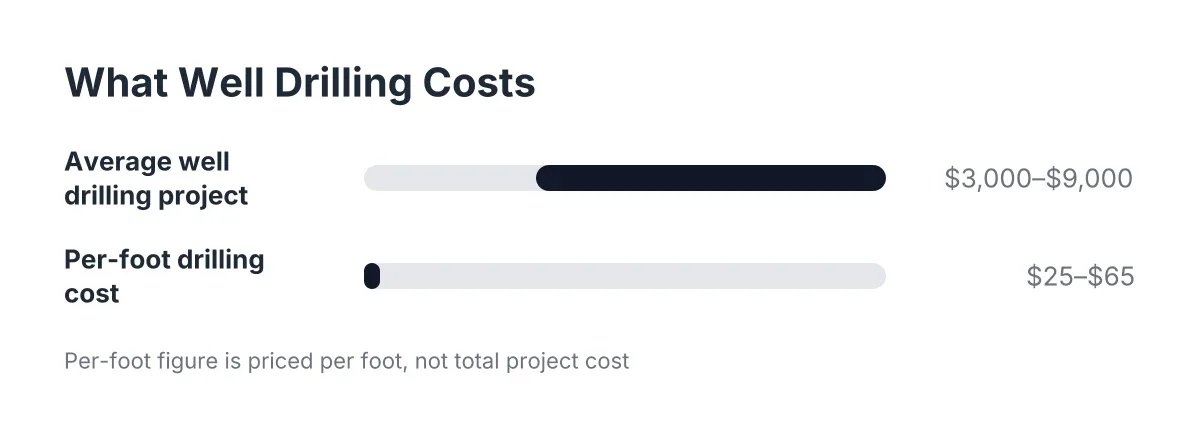
To put the stakes in context, national averages run $3,000 to $9,000 to drill a well, with a typical price around $5,500, according to HomeAdvisor. That said, averages hide the range. Per-foot pricing runs $25 to $65 depending on ground conditions, according to Angi, and depth is the variable nobody on a directory listing will discuss with you. A real local company will. That difference is your first and most reliable filter.
How to Verify a Well Company Is Licensed in Oregon
Oregon makes verification easier than most owners realize, and almost nobody does it. Every person who constructs, alters, or abandons a water well in the state must hold a water well constructor license through the Oregon Water Resources Department. This is separate from a general contractor license. Therefore, a CCB number alone does not prove someone can legally drill your well.
Here is what that means in practice. Before any money changes hands, ask the company for the name and license number of the licensed water well constructor who will supervise your job. Then check it against the state's records. A legitimate operator will hand this over without hesitation. However, if you get vague answers, a different name than the one on the truck, or a claim that the license "is being renewed," walk away. Unlicensed drilling in Oregon can leave you with a well the state considers noncompliant, and fixing that becomes your problem as the property owner, not the driller's.
Use Oregon Well Logs as Your Second Verification Layer
Beyond the license itself, Oregon gives you a second tool most states do not: public well logs. Drillers must file a report with the state for every well they construct, documenting depth, materials, and the formations they drilled through. Consequently, you can ask a prospective company for log numbers from recent jobs near your property and look them up yourself. A driller with real history in Corbett or Estacada can point to a paper trail. A lead-reseller cannot.
This is also where scale helps you judge credibility. The National Ground Water Association's Water Well Map contains data on more than 14 million wells nationwide, and more than 43 million Americans depend on private wells for their drinking water, according to the NGWA. In other words, well construction is a documented, regulated trade with public records behind it. Any company that treats basic documentation as an unusual request is telling you something. With this in mind, make license verification and well log review the two non-negotiable steps in your vetting process, especially if you cannot visit the site yourself.
Questions to Ask a Well Driller Before You Sign
Once a company passes the license check, the phone call is where you separate professionals from salespeople. You do not need technical knowledge to run this conversation. Instead, you need the right questions and an ear for how they get answered.
Start with local depth knowledge. Ask what depths they typically hit usable water at near your specific property, and what the ground looks like between the surface and the aquifer. A driller who works your area will answer in specifics: formations, typical depth ranges, and what nearby well logs show. By contrast, a company that answers in generalities is guessing, and you will pay for that guess by the foot. Depth and ground conditions drive cost more than any other factor, which is exactly what our well drilling cost guide walks through in detail.
Next, ask how they price the unknown. No honest driller can guarantee depth in advance. However, they can tell you their per-foot rate, what happens if they hit harder rock, and where the estimate could move. Vague pricing paired with pressure to sign is a red flag. So is a bid dramatically below everyone else's, because the difference usually reappears as change orders mid-job.
Extra Questions for Landlords and Out-of-Area Owners
If you manage the property from a distance, add a few more filters. Ask whether they will coordinate directly with your tenant or property manager for access. Ask whether they send photo documentation, well logs, and water test results by email without you chasing them. Additionally, ask whether they handle the full system, including pump installation and water testing, or whether you will need to hire and coordinate a second company remotely. A well repair company that works with landlords regularly will have ready answers to all three, because they have built their process around owners who cannot be on site.
Finally, ask about inspection and ongoing service. A professional well inspection typically costs $250 to $550, according to Angi, and it is cheap insurance before you buy a property on a well or approve a major repair. In practice, a company that offers inspection, pump repair, and water testing alongside drilling gives you one accountable phone number for the life of the well. For a remote owner, that single relationship is worth more than any discount.
Ready to Get Started?
If you own property on a well anywhere from Gresham out to Sandy, Boring, Damascus, Estacada, Corbett, or Oregon City, you now have a checklist most owners never use: verify the Oregon water well constructor license, pull nearby well logs, and ask the pricing questions that expose guesswork. When you are ready to talk to a well drilling company near you that actually works this ground, call us and put the framework to the test. We will answer every question on this page before you spend a dollar.